Venipuncture is a brief, routine procedure performed millions of times daily worldwide. Yet studies indicate that between 1% and 5% of individuals experience dizziness or nausea during or immediately after collection, and a smaller proportion lose consciousness for a matter of seconds.
Though alarming to witness, this response is not a sign of poor general health, and in the vast majority of cases it does not indicate cardiac disease. It is a well-characterised neural reflex — physiologically understood in detail, and largely preventable when both the patient and the phlebotomist know how to respond.
This article explains what actually happens in the body, why hydration and fasting matter more than most patients realise, what protocols quality-accredited laboratories apply, and when fainting genuinely warrants medical evaluation.
1. What Actually Happens in the Body
The most common cause of fainting during blood collection is vasovagal syncope, the predominant form of reflex (neurally mediated) syncope.
The episode begins with an exaggerated response of the autonomic nervous system, typically triggered by anxiety, pain, or the sight of blood or a needle. This produces a sudden surge in vagus nerve activity alongside withdrawal of sympathetic tone, expressed as one of three patterns:
• Cardioinhibitory response: a marked slowing of heart rate.
• Vasodepressor response: peripheral vasodilation causing a fall in blood pressure, with blood pooling in the lower extremities.
• Mixed response: the most common presentation, combining both.
The final common pathway is identical: transient cerebral hypoperfusion. When cerebral blood flow drops for only a few seconds, consciousness is lost.
The point most patients miss: loss of consciousness here is not a complication — it is a self-correcting mechanism. Once the body becomes horizontal, the gravitational gradient is removed, cerebral perfusion is restored, and consciousness returns within seconds to a minute, completely and without sequelae.
2. Early Warning Signs (Prodrome)
Vasovagal syncope rarely occurs without warning. It is usually preceded by a short window of symptoms known as the prodrome:
• Light-headedness or dizziness
• Nausea
• Facial pallor
• Cold sweating
• Tinnitus or transient hearing reduction
• Blurred or tunnel vision
• A sudden sensation of heat or cold, or repeated yawning
This window is the single most important factor. Acting correctly during these seconds — simply telling the phlebotomist and lying down — aborts most episodes and, critically, prevents fall-related injury, which is the only meaningful risk in the majority of these events.
3. Who Is Most at Risk
• Individuals with trypanophobia or blood-injection-injury phobia
• Those with a previous episode of dizziness or fainting during venipuncture or blood donation
• Younger patients — adolescents and young adults; the incidence of reflex syncope declines with age
• First-time patients
• Those fasting for prolonged periods, and those who are dehydrated
• Patients who are sleep-deprived, heat-exposed, or have stood for a long period beforehand
4. Dehydration — The Most Widespread Patient Misconception
One of the most common misunderstandings is the belief that fasting before a test also means abstaining from water. In most cases, this is incorrect.
Drinking moderate amounts of plain water does not affect the results of most blood tests, and is in fact recommended. Fluid depletion reduces plasma volume, producing two distinct consequences:
a. Impact on the collection itself:
• Difficulty locating and visualising veins
• Increased likelihood of repeated puncture attempts, compounding patient anxiety
• Greater susceptibility to vasovagal syncope in predisposed individuals
b. Impact on result accuracy — the more serious consequence:
Dehydration causes hemoconcentration, an increase in cellular and protein constituents relative to fluid volume, producing spuriously elevated results such as:
Hemoglobin — Falsely elevated
Hematocrit — Falsely elevated
Total Protein — Falsely elevated
Albumin — Falsely elevated
Urea / BUN — Falsely elevated
Total Calcium — Falsely elevated, tracking albumin
A falsely elevated value can generate unwarranted concern or trigger unnecessary follow-up testing. Accordingly, WHO guidance and CLSI GP41 recommend adequate hydration before most fasting blood tests, unless the physician or laboratory directs otherwise — a limited number of investigations, such as urine concentration testing, carry specific fluid-restriction instructions.
5. Fasting — When Is It Genuinely Required?
Contrary to popular belief, most laboratory tests do not require fasting — including complete blood count (CBC), thyroid function (TSH), HbA1c, vitamin D, and, in most contexts, liver and renal function panels.
Tests that typically do require fasting include:
• Fasting Blood Glucose: 8 hours.
• Lipid Profile: contemporary guidance — including the joint consensus statement of the European Atherosclerosis Society (EAS) and the European Federation of Clinical Chemistry (EFLM) — indicates that non-fasting samples are acceptable for routine assessment in most individuals. Fasting remains indicated in specific circumstances, such as marked hypertriglyceridaemia or treatment monitoring, at the discretion of the treating physician.
• Insulin, C-peptide, and certain tolerance tests.
Longer fasting is not better. Exceeding 12–14 hours produces genuine metabolic changes — including elevated free fatty acids, ketone bodies, and bilirubin — while increasing fatigue and dizziness, particularly in older adults, patients with diabetes mellitus, and those predisposed to syncope. Adhering to the specified duration, rather than exceeding it, is the correct practice.
6. How the Event Is Managed in a Quality-Accredited Laboratory
Patient safety during venipuncture is not improvised; it is a written protocol covering the pre-, intra-, and post-collection phases.
Before collection
• A direct, specific question: have you ever felt faint or lost consciousness during a blood draw?
• Verification of fasting duration and hydration status.
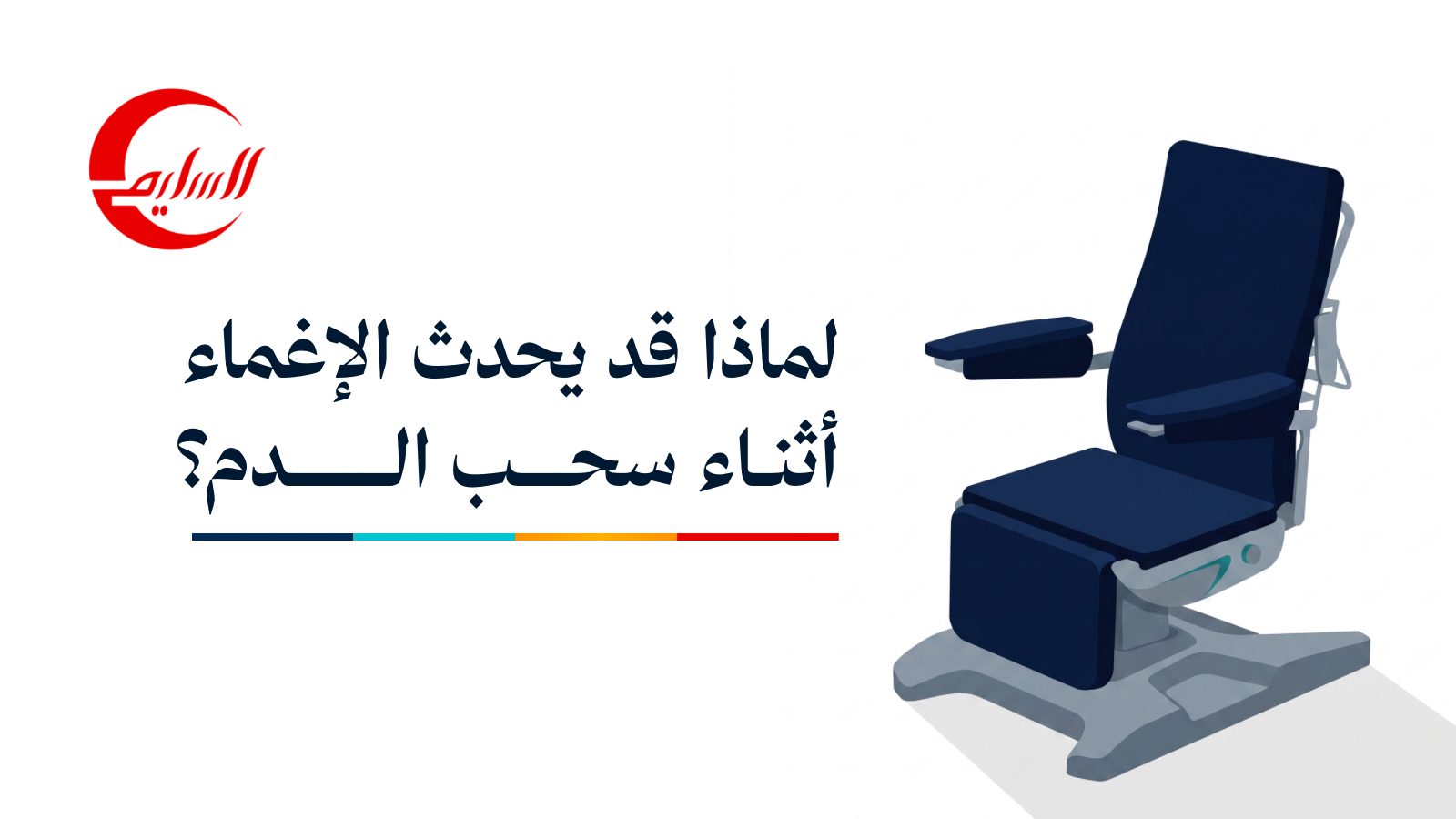
• Positioning determined by the answer: a phlebotomy chair with lateral armrests for routine cases; a supine couch for patients with a prior history.
• Blood is never drawn from a standing patient, under any circumstance.
During collection
• Distracting the patient and directing them away from watching the procedure.
• Encouraging physical counterpressure maneuvers at the first prodromal symptom — leg tensing, leg crossing, or hand gripping — recommended in the ESC 2018 guidelines and effective at aborting an episode before it completes.
• At the first warning sign: immediate cessation, tourniquet release, and safe needle withdrawal.
If an episode occurs
• Supine positioning with leg elevation to improve venous return and restore cerebral perfusion. This simple manoeuvre is the primary and effective intervention.
• Airway protection, loosening of tight neck clothing, and adequate ventilation of the room.
• Ammonia inhalants are not used — their recommendation has been withdrawn given the absence of demonstrated benefit and the potential for respiratory irritation.
• Monitoring of vital signs until full recovery.
After recovery
• The patient is not permitted to leave before full recovery, with an adequate observation period.
• Fluids and a light snack are offered, particularly to fasting patients.
• The patient is advised not to drive immediately afterwards.
• The event is documented in the patient record — so that the next visit is managed preventively and supine from the outset. This documentation is the practical difference between a laboratory that manages the event and one that prevents its recurrence.
7. Practical Advice Before Your Next Visit
1. Drink water. Unless your physician instructs otherwise, fasting does not mean abstaining from water.
2. Speak openly to the phlebotomist. Telling them you fear needles or have fainted before is not an embarrassment — it is the information that allows preventive measures to be taken in advance.
3. Do not watch the procedure. Turn your head, talk, or listen to something distracting.
4. Breathe slowly and steadily, and do not hold your breath.
5. Rise slowly. Wait one to two minutes in the chair after collection to avoid orthostatic hypotension.
6. Restore your energy. If fasting, bring a light snack or drink to consume immediately afterwards.
7. If the fear is severe and recurrent, an evidence-based behavioural technique known as applied tension — repeated whole-body muscle tensing to raise blood pressure before and during the procedure — can be learned in minutes and makes a genuine difference for those with needle phobia.
8. When Does Fainting Warrant Medical Evaluation?
The overwhelming majority of episodes during blood collection are vasovagal and benign. But syncope is a symptom, and less commonly it may point to another cause requiring assessment. Consult your physician if fainting is associated with any of the following:
• Occurrence during physical exertion, or while lying down
• Sudden onset with no prodromal symptoms
• Chest pain, palpitations, or shortness of breath
• Seizure activity, or injury sustained from the fall
• Slow recovery or persistent confusion after regaining consciousness
• Recurrent episodes
• A family history of sudden cardiac death at a young age
Conclusion
Fainting during blood collection is a well-understood neural response, not a disease. Its likelihood falls substantially with four straightforward steps: adequate hydration, precise adherence to the required fasting duration without exceeding it, disclosing any prior history of anxiety or dizziness to the phlebotomist, and lying down at the first sensation of light-headedness.
At Al-Saleem Medical Laboratory, we treat the collection phase as part of the test itself, not a preliminary to it. Accurate results begin with a sound sample, and a sound sample begins with a patient who is comfortable and reassured.
References
1. World Health Organization (WHO). WHO Guidelines on Drawing Blood: Best Practices in Phlebotomy.
2. Clinical and Laboratory Standards Institute (CLSI). GP41: Collection of Diagnostic Venous Blood Specimens.
3. Brignole M, Moya A, de Lange FJ, et al. 2018 ESC Guidelines for the diagnosis and management of syncope. European Heart Journal. 2018;39(21):1883–1948.
4. Shen WK, Sheldon RS, Benditt DG, et al. 2017 ACC/AHA/HRS Guideline for the Evaluation and Management of Patients With Syncope.
5. Nordestgaard BG, Langsted A, Mora S, et al. Fasting is not routinely required for determination of a lipid profile: EAS and EFLM joint consensus statement. European Heart Journal. 2016;37(25):1944–1958.
6. Lippi G, Salvagno GL, Lima-Oliveira G, et al. Postural change during venous blood collection is a major source of bias in clinical chemistry testing. Clinica Chimica Acta.
7. Ditto B, Gilchrist PT, Holly CD. Applied tension may help retain donors who are ambivalent about needles. Vox Sanguinis.